
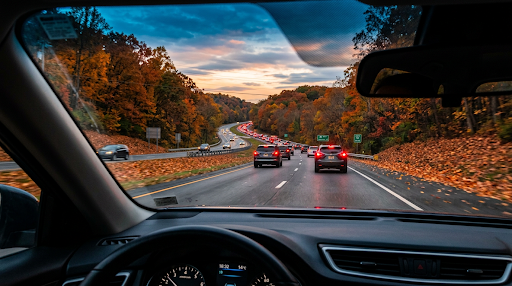
When a driver stops suddenly for wildlife on a Kentucky highway and is hit from behind, the trailing driver is typically liable for following too closely or driving distracted. October marks the beginning of peak white-tailed deer mating season across Kentucky, creating sudden road hazards that require full driver attention. While colliding directly with an animal is usually categorized as a comprehensive insurance claim, secondary collisions caused by an inattentive motorist who fails to stop in time represent clear negligence under state law.
Every autumn, thousands of motorists travel major corridors like I-64, I-65, and the Gene Snyder Freeway (I-265) near Louisville as daylight hours shrink. When an animal darts across multi-lane highways or two-lane rural roads, alert drivers naturally apply their brakes to avoid a direct impact. When motorists behind them are looking down at smartphones, adjusting digital dashboards, or speeding, catastrophic chain-reaction crashes occur. Understanding your legal rights after a secondary auto collision is essential to securing fair compensation for your injuries and property damage.
Why Do Deer Mating Seasons Trigger Secondary Crashes?
Secondary collisions occur when a lead driver reacts appropriately to an animal on the roadway, but trailing drivers fail to react in time due to inattention, tailgating, or excessive speed. In October, deer activity surges during dawn and dusk hours, directly overlapping with peak morning and evening commuter traffic throughout the Louisville area. When an animal enters traffic, safe drivers brake or come to a controlled stop, but inattentive drivers behind them turn a near-miss with wildlife into a severe multi-vehicle wreck.
Under Kentucky traffic safety statutes, every motorist has a continuous legal duty to maintain a safe following distance and keep a proper lookout ahead. Motorists who glance down at mobile phones take their eyes off the road for several seconds at a time. At highway speeds of 65 miles per hour, looking at a text message for five seconds means traveling the entire length of a football field without looking at the pavement. When traffic slows abruptly for an animal crossing, that brief delay makes a high-speed rear-end collision unavoidable.
Wildlife behavior during the autumn rutting season is inherently unpredictable. Bucks pursue does across busy parkways, suburban bypasses, and rural connectors without hesitation. Drivers who maintain proper space buffers can manage these sudden stops without incident. The underlying cause of the physical crash is not the animal on the shoulder; it is the negligence of the driver behind you who was not paying attention to slowing traffic ahead.
Who Is Liable in a Multi-Vehicle Wildlife Crash?
Liability in a secondary animal collision rests with the motorist whose negligent actions directly caused the impact, which is almost always the trailing inattentive driver. Kentucky operates under a pure comparative fault system, meaning fault is apportioned among all parties based on their contribution to the collision. An alert driver who safely brings their vehicle to a stop to avoid hitting an obstacle or animal has acted prudently and is rarely assigned fault when struck from behind.
Establishing fault after an October chain-reaction crash involves investigating specific driver behaviors, including:
- Following too closely (tailgating) without leaving adequate stopping distance for autumn road conditions.
- Distracted driving, such as texting, browsing social media, handling navigation systems, or making handheld phone calls.
- Driving at speeds that exceed posted limits or driving too fast for reduced visibility conditions during October twilight hours.
- Failing to observe illuminated brake lights and slowing traffic flow ahead.
- Panicked overcorrection or erratic lane changes that sideswipe adjacent motorists.
Insurance carriers frequently attempt to blame unpredictable wildlife for the entire wreck to avoid paying legitimate personal injury claims. However, an animal darting across the road does not excuse another motorist from their legal responsibility to maintain vehicle control and watch the road. A dedicated automobile accident attorney can establish that the trailing driver had ample opportunity to stop safely had they been watching the road instead of their phone.
What Evidence Proves Distracted Driving After an Animal Crossing?
Proving that a trailing driver was distracted requires gathering concrete electronic, physical, and eyewitness evidence before it is lost or overwritten. Because drivers rarely admit to looking at their phones prior to an impact, prompt legal action is vital to uncover objective data that demonstrates inattention. Documenting the sequence of events immediately after the wreck creates an undeniable record of negligence.

Key evidence used to prove liability in autumn rear-end collisions includes:
- Cellular phone records subpoenaed to reveal active text messaging, outgoing or incoming calls, or data transmissions at the exact minute of the impact.
- Event Data Recorders (black boxes) installed in modern vehicles, which record pre-impact vehicle speed, throttle position, and precise braking timing.
- Dashcam footage from involved vehicles or commercial trucks traveling nearby along Kentucky parkways.
- Traffic camera feeds and commercial security recordings from nearby intersections and businesses.
- Kentucky Uniform Police Traffic Collision Reports prepared by responding law enforcement officers.
- Physical roadway evidence, such as the total absence of pre-impact skid marks indicating the trailing driver never attempted to brake.
When trailing drivers fail to brake before striking a stopped vehicle, the physics of the crash show they never perceived the hazard. Our experienced legal team investigates these physical indicators thoroughly to ensure responsible drivers are held fully accountable for their recklessness.
How Does Kentucky Insurance Law Apply to Secondary Crashes?
Kentucky is a choice no-fault insurance state, meaning your initial medical bills and lost wages are covered by your own Personal Injury Protection (PIP) coverage regardless of who caused the crash. Kentucky PIP benefits provide up to $10,000 in basic economic relief for medical treatments and lost earnings. However, severe high-speed rear-end collisions frequently result in medical expenses that rapidly exceed this statutory threshold.
When your injuries exceed Kentucky’s statutory no-fault thresholds, you have the legal right to step outside the no-fault system and pursue a direct liability claim or lawsuit against the at-fault driver. To cross this threshold, your injuries must involve more than $1,000 in reasonable medical expenses, or result in permanent disfigurement, a bone fracture, permanent injury, or permanent loss of a bodily function. Once qualified, you can pursue comprehensive compensation from the at-fault driver’s bodily injury liability policy.
Securing full compensation from a negligent driver’s insurer allows you to recover for damages not covered by basic PIP, including pain and suffering, future medical rehabilitation, and loss of future earning capacity. Reviewing past client testimonials demonstrates the profound impact that dedicated trial advocacy has when standing up to aggressive insurance defense tactics.
What Steps Should You Take Immediately After an Autumn Crash in Kentucky?
Taking prompt, methodical steps following a secondary highway collision protects both your physical health and your legal claim. In the chaotic moments following a high-speed impact on a busy roadway, knowing what actions to take ensures your rights remain secure.
Follow these critical steps immediately after an accident:
- Move your vehicle to a safe location on the shoulder if possible, turn on hazard lights, and remain inside if highway traffic is heavy.
- Dial 911 immediately to request police dispatch and emergency medical assistance to the scene.
- Seek a comprehensive medical evaluation right away, even if you believe your injuries are minor, as shock and adrenaline often mask serious soft-tissue damage and concussions.
- Take detailed photographs of vehicle damage, license plates, surrounding road conditions, lighting, and any absence of skid marks.
- Obtain the full name, contact information, driver’s license number, and insurance details of all involved motorists.
- Gather names and phone numbers of independent witnesses who observed the crash or heard statements from the other driver.
- Refuse to give recorded statements to the other driver’s insurance adjuster before consulting an attorney.
Insurance adjusters often contact injury victims within days of an accident, attempting to offer swift, undervalued settlements before the full scope of your medical needs is known. Protecting your long-term recovery requires standing firm and letting skilled legal advocates handle all communications with insurance companies.
Frequently Asked Questions
Can an insurance company deny my claim by blaming the deer?
An insurance company cannot deny your bodily injury claim against another driver simply because an animal was on the road. While hitting an animal directly is an unpreventable event handled under comprehensive coverage, a trailing driver hitting you from behind is a separate act of driver negligence. The trailing motorist is legally obligated to maintain control of their vehicle and maintain a safe following distance regardless of roadway surprises.
What if I braked hard to avoid hitting the animal?
Braking to avoid a collision with an obstacle or animal on the road is considered a standard, reasonable response under Kentucky law. Unless a driver stops abruptly without any reason or acts with reckless disregard for others, trailing motorists bear the primary legal duty to maintain enough following distance to stop safely behind slowing traffic.
How long do I have to file an auto accident lawsuit in Kentucky?
Under the Kentucky Motor Vehicle Reparations Act, you generally have two years from the date of the motor vehicle accident, or two years from the date of the last PIP benefit payment made by your insurer, to file a personal injury lawsuit. Missing this strict statute of limitations permanently bars your right to financial recovery, making early legal consultation essential.
What damages can I recover after a distracted driving crash?
Victims of distracted driving collisions in Kentucky can recover economic damages, including past and future medical bills, physical therapy costs, lost wages, and reduced earning potential. Additionally, you can seek non-economic damages for physical pain, mental anguish, and loss of enjoyment of life caused by your injuries.
Summary and Legal Guidance
Autumn road hazards such as increased deer activity present significant challenges on highways across Kentucky. While wildlife movement is natural and expected during October, catastrophic secondary collisions occur when trailing motorists drive distracted, follow too closely, or speed. Holding negligent, inattentive drivers accountable ensures that injured victims do not bear the financial burden of another person’s reckless behavior behind the wheel.
Alex R. White, PLLC, Sue Distracted Driver is dedicated to fighting for accident victims in Louisville and across Kentucky who have been injured by careless and distracted motorists. Our experienced trial attorneys investigate every detail of your secondary collision, outwork the insurance companies, and relentlessly pursue the maximum compensation you deserve. If you or a loved one was injured in an autumn highway wreck, contact us online or call (502) 882-7552 today for a free case evaluation.
This is an advertisement. Alex White is a lawyer licensed solely in Kentucky. Work may be performed by another Attorney. Content on this website does not constitute official legal advice. Always seek legal advice from a qualified attorney before making decisions that impact a real-world situation.
