
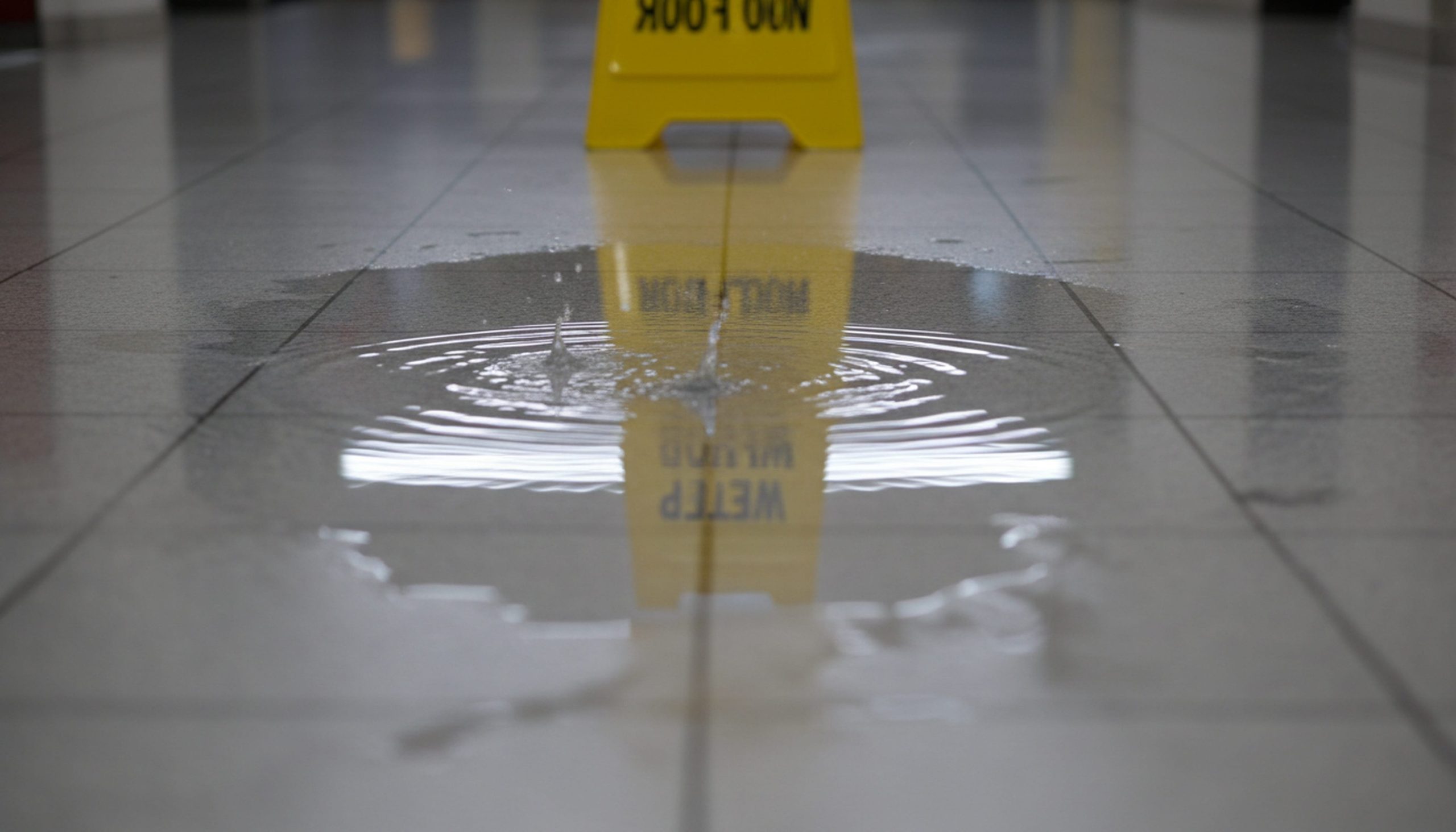
An August thunderstorm can turn a store entrance into a hazard within minutes, and a business that fails to address that hazard can be held responsible for injuries that follow. To win a slip and fall claim after a storm-related fall in Kentucky, an injured person generally needs to show that the business knew or should have known about the wet floor and failed to address it within a reasonable amount of time.
Summer storms create a different kind of slip and fall risk than the ice and snow most people associate with winter injury claims. Rain tracked in on shoes, water pooling near entrances, and slick tile in high traffic areas all create conditions that develop fast and change constantly throughout a single storm. Understanding how Kentucky law treats these cases, and what separates a legitimate claim from one a business can successfully defend, matters for anyone hurt in a fall this summer.
Why Summer Storms Create Unique Slip and Fall Risks
Rain moves through Kentucky quickly during the summer months, often arriving with little warning and leaving standing water at entrances, loading areas, and walkways within minutes. Unlike a slow winter freeze that builds up ice over hours, a summer downpour can create a hazardous floor condition almost instantly, which puts real pressure on businesses to respond fast.
Foot traffic makes the problem worse. Every person who walks in from the rain tracks additional water across floors that are often tile, laminate, or polished concrete, surfaces that become especially slick when wet. A grocery store, restaurant, or retail location near downtown Louisville can see dozens of people track in water within a short window during a single storm, and that water does not stay contained near the entrance for long.
Humidity adds another layer that many people do not think about. Even after a storm passes, condensation on cold surfaces like refrigerated cases or air-conditioned entryways can create slippery spots that persist long after the rain has stopped, catching customers off guard on an otherwise sunny day.
What a Business Owner Is Required to Do
A property owner is required to exercise reasonable care to keep the premises safe, which includes addressing hazards like wet floors within a reasonable amount of time after they become known or should have become known. This standard, often referred to as premises negligence, does not mean a business must eliminate every drop of water the moment it appears, but it does mean they cannot ignore an obvious hazard for an unreasonable length of time.
Reasonable care during a storm typically involves placing mats at entrances, deploying wet floor signs, and having staff periodically check high traffic areas for standing water or tracked in rain. A business that has a system in place for these steps, and follows it consistently, is in a much stronger position to defend a slip and fall claim than one that has no plan at all.
The frequency of inspection matters quite a bit here. A business with a documented policy of checking entrances every fifteen minutes during active weather has a reasonable argument that it acted responsibly, even if a fall still occurred between inspections. A business with no inspection policy, or one that ignored complaints about a wet floor for an extended period, faces a much harder time defending its conduct.
How Kentucky Courts Handle the Open and Obvious Defense
Businesses often argue that a wet floor was open and obvious, meaning the hazard should have been visible enough that the injured person could have avoided it. For years, this defense could end a case before it ever reached a jury in Kentucky, but that is no longer true.
The Kentucky Supreme Court changed this significantly, ruling that the open and obvious nature of a hazard does not automatically eliminate a property owner’s duty of reasonable care. Instead, whether a hazard was obvious becomes a factual question for a jury to weigh alongside what the property owner knew, what steps they took, and how a reasonable person would have responded to the situation. This shift means a business cannot simply point to a wet floor sign and expect the case to be dismissed. The presence of a sign is one factor among several a jury will consider, not an automatic defense.
This change matters significantly for summer storm cases. A visibly wet entrance during a downpour might seem obvious to a business defending a claim, but Kentucky law now allows a jury to weigh whether that visibility actually gave someone a real opportunity to avoid the hazard, especially when foot traffic, distractions, or the sheer pace of a busy store made it difficult to notice in the moment.
Kentucky’s Comparative Fault Rule and What It Means for Your Claim
Kentucky follows a pure comparative fault system, meaning an injured person can still recover compensation even if they share some responsibility for the fall, though their compensation gets reduced by their percentage of fault. This differs from states with stricter fault rules that can bar recovery entirely once a certain threshold of fault is reached.
In practice, this means a jury might decide a business was seventy percent responsible for a fall because staff failed to address a known wet floor, while the injured person was thirty percent responsible for not noticing an obvious puddle. Under Kentucky’s system, that person can still recover seventy percent of their damages rather than nothing at all.
This comparative structure is one of the more important details many people do not realize applies to their case. A business’s insurance adjuster may try to argue that a claim has no value at all because the injured person could have avoided the hazard, but under Kentucky law, shared fault reduces compensation rather than eliminating it entirely in most situations.
Building Evidence for a Storm-Related Slip and Fall Claim
Photographs taken immediately after a fall carry significant weight, since standing water, missing mats, or the absence of a wet floor sign can all be documented before conditions change or the area gets cleaned up. Taking photos from multiple angles, including wide shots that show the surrounding area and close ups of the specific hazard, creates a stronger record than a single image.
Incident reports matter more than many people realize. Most businesses have a formal process for documenting customer injuries, and requesting a copy of that report, or at minimum confirming that one was filed, protects an injured person’s ability to reference the business’s own account of what happened later in the claims process.
Surveillance footage often exists in retail and restaurant settings, and this footage can show how long a hazard was present before the fall, whether staff walked past it without addressing it, and how quickly, if at all, anyone responded afterward. Requesting that a business preserve this footage as soon as possible matters significantly, since many systems automatically overwrite recordings after a set number of days.
Witness accounts from other customers or employees can also support a claim, particularly when it comes to establishing how long a hazard had been present. A witness who mentions seeing water on the floor for several minutes before a fall occurred can help establish that a business had enough time to notice and correct the problem.
Common Pitfalls in Slip and Fall Claims After a Storm

One of the most common mistakes is assuming a fall was simply an accident with no one at fault. Many storm-related falls happen precisely because a business failed to follow a reasonable inspection and cleanup routine, and an initial assumption that nothing could have been done differently often prevents someone from pursuing a claim they would otherwise be entitled to.
Waiting too long to seek medical attention creates problems that extend well beyond physical recovery. Injuries like sprains, soft tissue damage, or a concussion from hitting the ground can seem minor at first, and a delay in treatment gives an insurance company room to argue that the injury was not connected to the fall or was not as serious as claimed.
Another pitfall involves underestimating how quickly evidence disappears. A wet floor gets mopped up, a sign gets put away, and surveillance footage gets overwritten within days in many systems. The sooner a claim is documented and an attorney is involved in preserving evidence, the stronger the eventual case tends to be.
Kentucky’s statute of limitations for personal injury claims also creates a real deadline that many people underestimate. Waiting months to decide whether to pursue a claim reduces the time available to gather evidence and can affect whether a claim can still be filed.
Why Storm-Related Falls Differ From Winter Ice Cases
Kentucky slip and fall cases involving winter ice often center on questions about natural accumulation and how quickly a property owner could reasonably be expected to clear snow or ice from a large outdoor area. Summer storm cases usually involve a different set of questions, focused more on indoor conditions, inspection frequency, and how a business responded within the timeframe of a single weather event rather than an ongoing winter season.
This distinction affects how evidence gets gathered and what a strong claim looks like. A winter ice case might focus heavily on weather reports and how long snow had been falling before a property owner had a reasonable opportunity to respond. A summer storm case more often focuses on a business’s internal policies, staff training, and whether reasonable steps were taken during the specific window of time the hazard existed.
Understanding how liability works in different types of slip and fall cases helps clarify why the same general legal principles can lead to very different evidence requirements depending on the specific circumstances of a fall.
Frequently Asked Questions
Can I still recover compensation if I should have noticed the wet floor?
Yes, under Kentucky’s comparative fault system, you can still recover compensation even if you share some responsibility for the fall, though the amount gets reduced by your percentage of fault. This applies even when a business argues the hazard was open and obvious.
How long do I have to file a slip and fall claim in Kentucky?
Kentucky generally requires personal injury claims, including slip and fall cases, to be filed within one year of the accident. Because this deadline is firm, it is worth having your situation reviewed well before that window closes.
Does a wet floor sign automatically protect a business from a claim?
No, a wet floor sign is one factor a jury will consider, not an automatic defense. Kentucky courts now treat the obviousness of a hazard as a factual question about whether the business still exercised reasonable care overall.
What should I do immediately after slipping on a wet floor in a store?
Take photos of the hazard, including the surrounding area, before it gets cleaned up, and ask the business to file an incident report documenting what happened. Seeking medical attention promptly, even for injuries that feel minor, also protects both your health and your claim.
Is a storm-related slip and fall different from a winter ice case?
Yes, storm-related falls typically focus on a business’s indoor inspection and cleanup practices during a specific weather event, while winter ice cases often involve questions about outdoor snow and ice accumulation over a longer period. The type of evidence that matters most differs between the two.
What This Means for Kentucky Residents Injured in a Storm-Related Fall
A wet floor after a summer storm is not automatically the fault of a business, but it is also not automatically the fault of the person who fell. Kentucky law requires a careful look at what the business knew, what steps they took, and how a reasonable person in that situation would have responded, and that analysis depends heavily on the specific facts of each case.
At Alex R. White, PLLC, Sue Distracted Driver, we represent Kentucky residents injured in slip and fall accidents, including falls caused by wet floors during summer storms at stores, restaurants, and other businesses across Louisville and the surrounding area. Our approach to these claims focuses on gathering the surveillance footage, incident reports, and witness accounts that these cases depend on before that evidence disappears.
If you were injured in a fall caused by a wet floor during a Kentucky storm this August, get a free case evaluation to find out whether the business’s response to the hazard meets the standard of reasonable care Kentucky law requires.
