
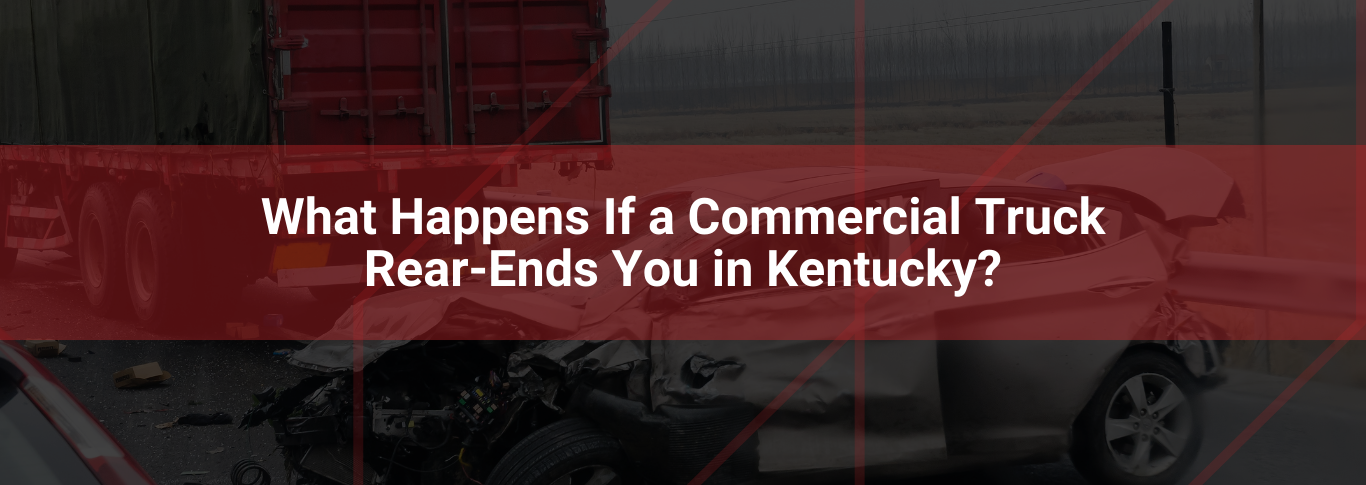
When a Routine Drive Turns Into a Catastrophic Crash
There’s a world of difference between being rear-ended by a passenger car and being hit by a fully loaded 80,000-pound commercial truck. These collisions are not just more forceful—they’re more legally complex, more financially significant, and more emotionally devastating. If you’ve been rear-ended by a commercial truck in Kentucky, the consequences can ripple through every area of your life: your health, your career, your finances, and your sense of safety.
This guide breaks down what happens after a truck rear-end crash in Kentucky, including how liability is determined, what federal laws apply, and why hiring a commercial truck accident lawyer is essential to protect your rights and maximize your compensation.
Why Truck Rear-End Accidents Are So Devastating
Commercial trucks carry enormous momentum due to their weight. Even at low speeds, a rear-end collision can cause:
- Catastrophic injuries (e.g., spinal cord trauma, brain injuries, amputations)
- Multiple-vehicle pileups on highways
- Explosions or fires if fuel tanks rupture
- Long-term psychological trauma
Unlike accidents involving two personal vehicles, truck accidents almost always involve commercial policies with million-dollar coverage limits—making these cases high-value but also heavily defended by trucking companies and insurers.
Common Causes of Commercial Truck Rear-End Crashes
Rear-end collisions caused by commercial trucks often stem from:
- Driver fatigue: Long hauls can lead to drowsy or microsleep episodes, despite hours-of-service regulations.
- Brake failure or inadequate maintenance: Worn brake systems increase stopping distance dramatically.
- Distracted driving: Mobile device usage, dispatch systems, or even GPS systems inside the cab.
- Speeding or following too closely: Trucks need much more distance to stop safely, especially when loaded.
- Unqualified or undertrained drivers: A trucking company’s failure to verify certifications or safety records can be grounds for liability.
Who’s Liable? It’s Not Just the Truck Driver
In Kentucky, determining who is liable after a commercial truck rear-ends your vehicle is more complex than in standard crashes. Multiple parties may share legal responsibility, including:
- The truck driver: If the driver was speeding, distracted, fatigued, or intoxicated.
- The trucking company: If they failed to properly vet or train the driver, imposed illegal scheduling demands, or neglected vehicle maintenance.
- A third-party maintenance provider: If faulty brakes, tires, or other components failed due to negligence in inspections or repairs.
- The truck manufacturer or parts supplier: If a defective part (like faulty air brakes) contributed to the crash.
- Cargo loaders: Improperly secured or overweight cargo can cause instability or braking failures.
This is what makes commercial truck claims unique—the potential to hold multiple entities accountable under Kentucky personal injury and federal trucking law.
Federal Laws That Impact Your Truck Accident Case
Trucking companies and drivers must comply with the Federal Motor Carrier Safety Regulations (FMCSRs) enforced by the Federal Motor Carrier Safety Administration (FMCSA). These regulations govern:
- Driver qualifications and CDL licensing
- Hours-of-service (HOS) limits to reduce fatigue
- Drug and alcohol testing
- Truck maintenance and inspection logs
- Load securement standards
- Electronic logging devices (ELDs) that track driver hours
If any of these rules were violated at the time of your crash, your lawyer can use that noncompliance to prove negligence and significantly strengthen your case.
Why Evidence Preservation Is Crucial
In truck accident cases, time is your enemy. Trucking companies often deploy rapid-response legal teams to minimize liability before you even receive medical care. That’s why it’s critical to hire an attorney immediately to send a spoliation letter—a legal document that requires the trucking company to preserve vital evidence.
Key evidence includes:
- Black box (ECM) data: Shows speed, brake pressure, RPMs, and more before the crash.
- Driver logs & ELD data: Reveals driving hours, rest breaks, and HOS violations.
- Maintenance and inspection records: Can show negligence or falsified inspections.
- Dashcam footage: Crucial for reconstructing what happened.
- Employment and training records: Help reveal hiring and oversight issues.
- Toxicology reports: If drug or alcohol impairment is suspected.
Delaying action can lead to deleted or overwritten data—which makes early legal intervention essential.
Compensation in Kentucky Truck Rear-End Cases
Because commercial truck crashes typically involve severe injuries, settlements or jury awards are often significantly higher than in standard auto accidents.
Potential damages include:
Economic damages:
- Emergency care, surgeries, long-term rehab
- Lost income and diminished future earning capacity
- Home modifications, wheelchairs, or special medical equipment
- Property damage to your vehicle
Non-economic damages:
- Physical pain and suffering
- Emotional trauma and PTSD
- Loss of enjoyment of life
- Loss of consortium (impact on spousal relationships)
Punitive damages: In cases involving gross negligence (e.g., falsified logs, DUI, egregious safety violations), Kentucky courts may award punitive damages to punish the defendant and deter future misconduct.
Pure Comparative Fault in Kentucky: Why It Matters
Kentucky follows a pure comparative fault system. This means that even if you’re partially at fault (e.g., you stopped suddenly), you can still recover damages—though your compensation will be reduced by your percentage of fault.
This is another reason why robust evidence and expert legal advocacy are critical. Trucking insurers will often try to assign partial blame to reduce their payout, especially in complex multi-vehicle crashes.
Why You Need a Truck Accident Lawyer
Rear-end crashes involving trucks are high-stakes cases. The legal teams representing commercial carriers are aggressive, well-funded, and experienced in avoiding payouts. Your lawyer will:
- Launch an immediate investigation
- Send spoliation letters to preserve black box and logbook data
- Work with accident reconstructionists and medical experts
- Challenge lowball settlement offers
- Prepare your case for trial if needed
Without a skilled truck accident lawyer in Kentucky, you’re likely to face delay tactics, blame-shifting, and settlement pressure that leaves you undercompensated.
Frequently Asked Questions (FAQ)
Q: Can I sue the trucking company even if the driver caused the crash?
Yes. Under the legal doctrine of respondeat superior, employers are often liable for their drivers’ negligence if it happened during the course of their job duties.
Q: How long do I have to file a claim in Kentucky?
Generally, you have two years from the date of the crash—or from the last PIP (Personal Injury Protection) payment. However, earlier legal action is advised to preserve evidence.
Q: What if the truck driver was an independent contractor?
Liability still may extend to the company if it exerted control over the driver’s schedule, branding, or operations. Your attorney will assess the employment relationship.
Q: What should I do immediately after a truck rear-end crash?
Call 911, seek medical attention, document everything with photos and notes, collect contact information, and do not speak to the trucking company or their insurer before talking to an attorney.
Q: Will the trucking company try to contact me?
Yes, and often quickly. Their goal is to minimize your claim. Never provide recorded statements or accept early settlement offers without legal counsel.
Hit by a Truck? You Don’t Have to Face It Alone
If you’ve been rear-ended by a commercial truck in Kentucky, you’re dealing with more than a typical car crash. You’re facing a powerful industry that’s trained to protect its bottom line. But at Sue Distracted Driver, we’re trained to protect you. We fight back against trucking companies that cut corners—and help accident victims across Kentucky reclaim their health, dignity, and future.Schedule your free consultation today. Let us investigate your crash, preserve critical evidence, and fight for the compensation you rightfully deserve.
